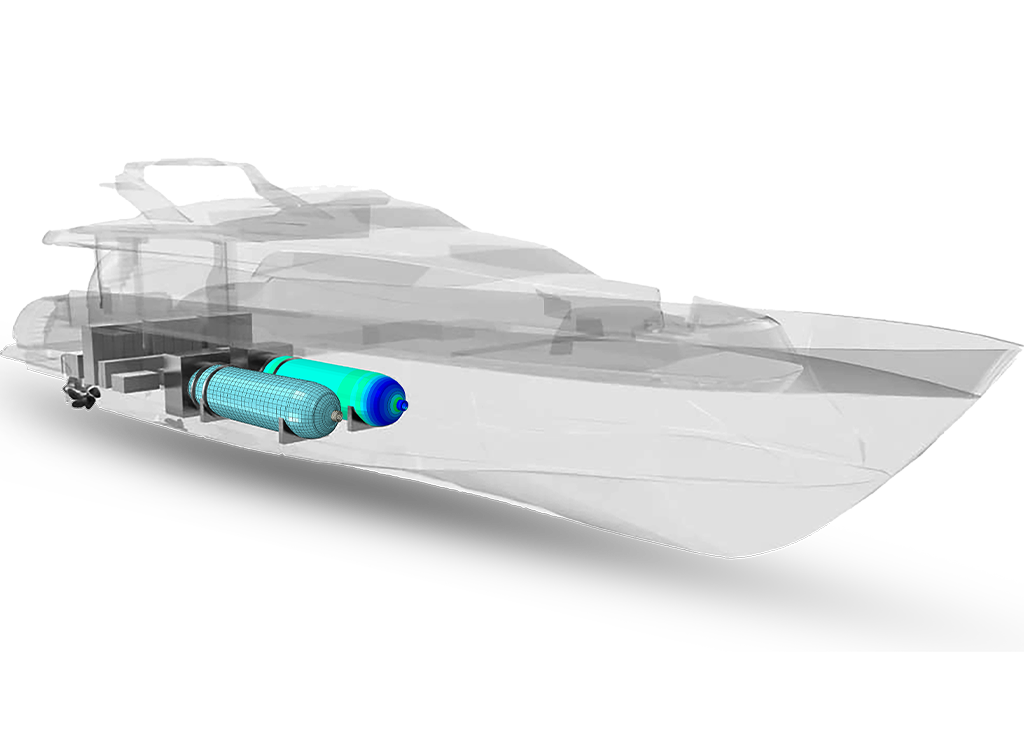
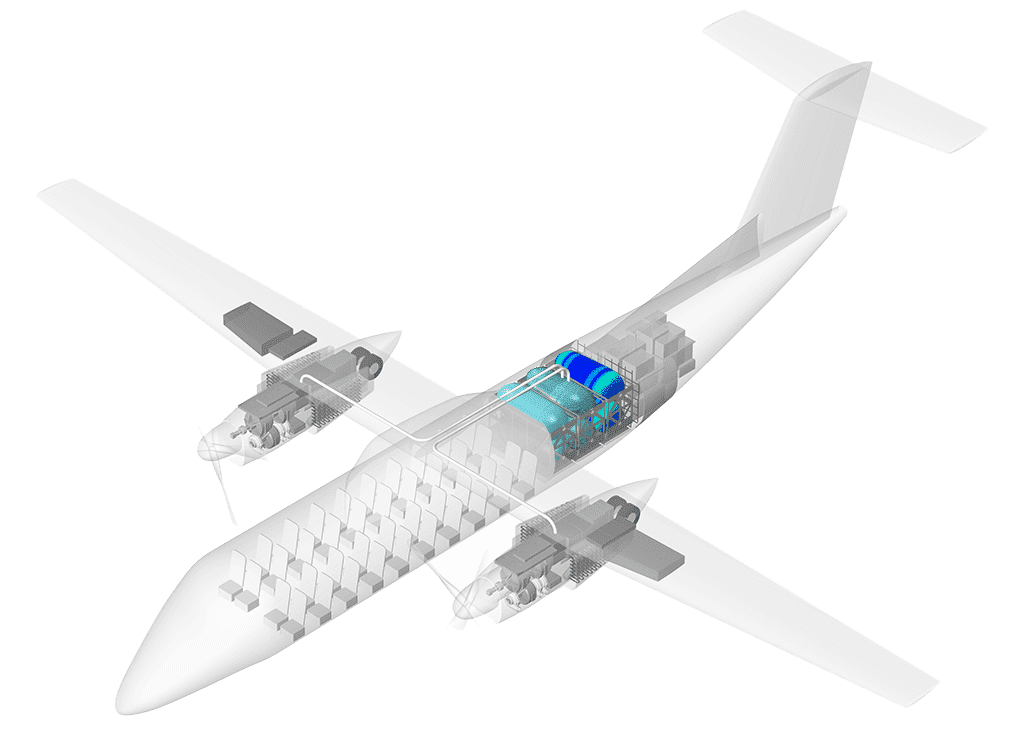
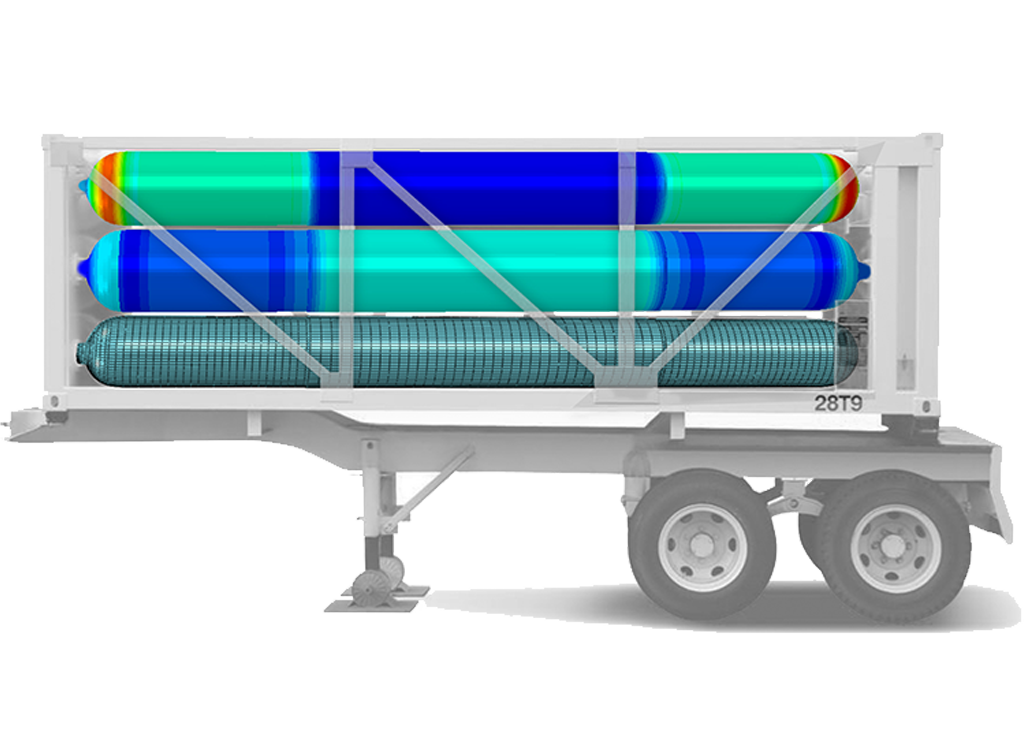
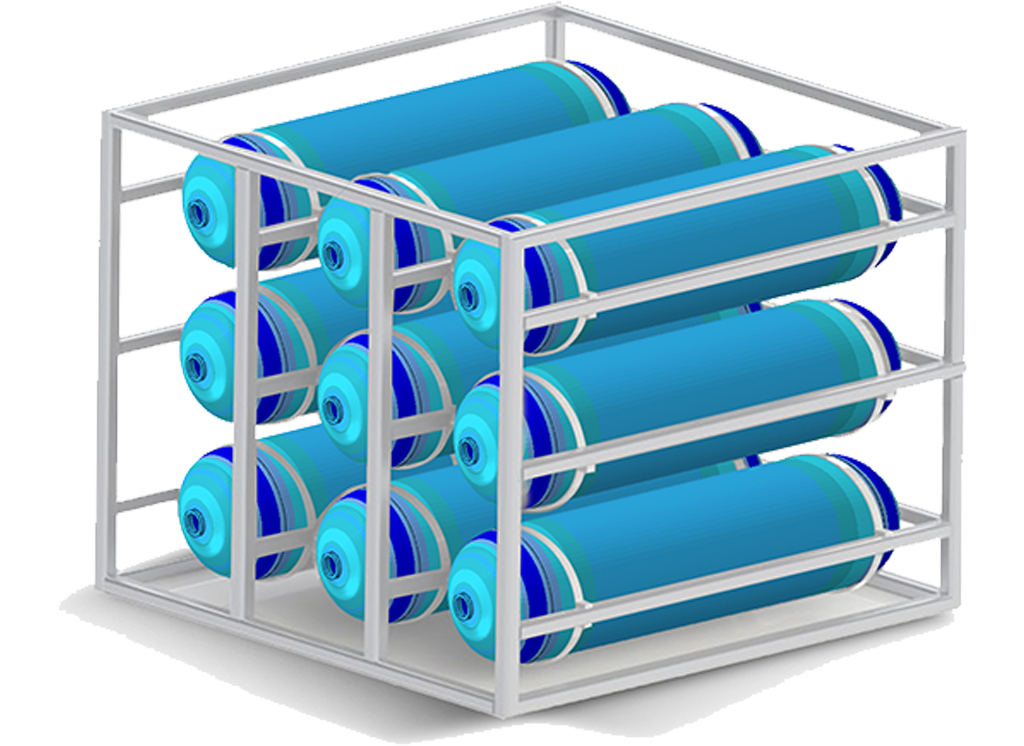
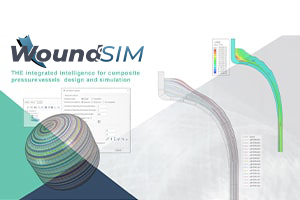
WoundSim Abaqus is an application for designing and analyzing composite overwrapped pressure vessels (COPVs)
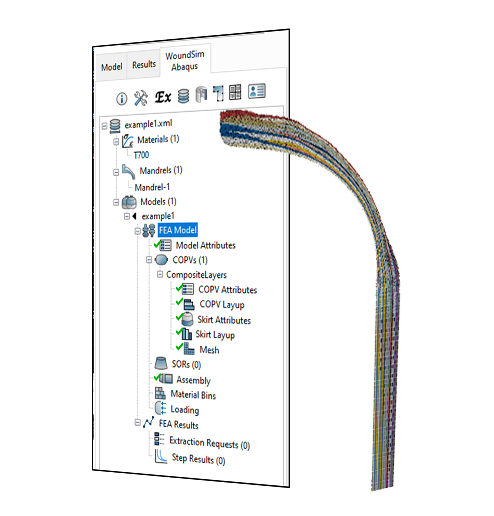
WoundSim Abaqus, a plugin into Abaqus/CAE, allows the user to define a sequence of layers of a COPV, view the cross-section of the COPV, and automatically build the COPV geometry suitable for finite element analysis. Following COPV geometry (shell vs. continuum, 3D vs. axisymmetric), is automated meshing, loading, analysis controls, output requests, execution, and automated result path plotting.
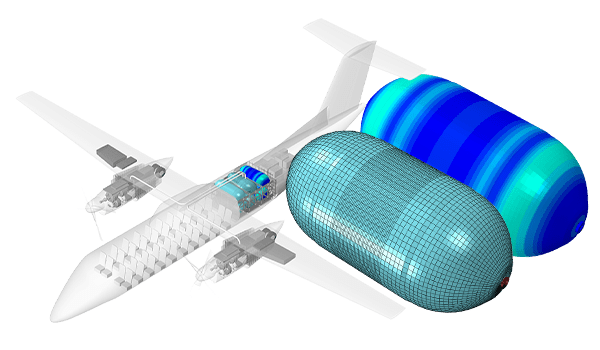
FEA of COPV with WoundSim Abaqus
Fully automated 3D or Axisymmetric, shell or continuum geometry creation
One-click fully automated meshing, or detailed, option-rich meshing tools which control meshing in dome separately from meshing in cylinder
Equivalent smeared properties and orientations are generated to accurately model both sets of bands of helicals and hoops.
Symmetric representation of each layers allows for progressive damage from within Abaqus to be used.
Micro-mechanics tool to convert matrix and fiber properties to lamina properties which are required for model assignment
Both Abaqus/Explicit and Abaqus/Standard are supported
Failure measures applied to both lamina directions include max stress/strain, TsaiHill, TsaiWu, AssiTsaiHill
Automated path plotting of results can be used to compare output from different models allowing for efficient design studies
Local output quantities computed by built-in libraries, no need for a Fortran Compiler
Resulting Abaqus/CAE model can extended using the extensive capabilities inside Abaqus/CAE including progressive damage of the COPV
Manufacturing COPVs with WoundSim GUI
The WoundSim GUI is being developed to perform the manufacturing of COPVs. Please check back for an announcement of the availability of the first beta version within the next year or two. The current progress includes the following:
Circuit trajectory computation for helical, hoop and connector layers
Exact circuit trajectory computation for helical non-geodesic layers using numerical integration
Friction potential computation to access the layer or connector feasibility
Computation of all feasible patterns for each layer
Computation of coverage, deviation, circuits numbers and path lengths for each pattern
Assessment of the layer feasibility and possibility of the final wind angle optimization
Transfer of layout module data (laminate table and layout results) to manufacturing module
WoundSim Abaqus Demo
WoundSim Abaqus
To the left is demo of WoundSim. The demo covers the creation, analysis, and post processing of a COPV model.
A more detailed feature list of WoundSim’s capabilities are described in an application brief.